
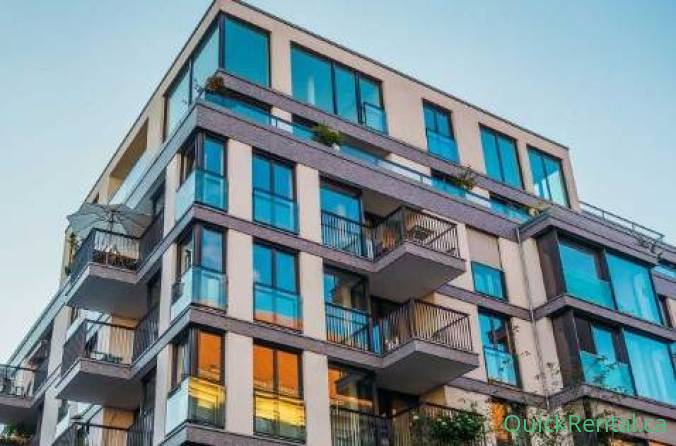
Apartments for Rent in Toronto 2026: The Insider Guide Every Renter and Landlord Needs Right Now
Published: March 2026 • Reading Time: ~15 minutes • Categories: Toronto Rental Market 2026, Apartments for Rent in Toronto, Landlords in Toronto
She landed at Pearson International Airport on a cold January morning with two suitcases, a LinkedIn profile, and a carefully folded printout of five rental listings she had found on a national aggregator. By the end of that first week — after three scam listings, two units already rented, and one landlord who never called back — she was sitting in a Tim Hortons in Scarborough wondering if she had made the biggest mistake of her life.
Her name is Priya. She is a software engineer from Bangalore, newly hired at a fintech firm in downtown Toronto. Her story is not unique. Every month, thousands of newcomers, young professionals, and growing families go through the same exhausting search for apartments for rent in Toronto — and most of them start with the wrong tools, the wrong information, and zero knowledge of how the Toronto rental market 2026 actually works.
This guide is for Priya. It is for the couple in Brampton moving closer to the subway line. It is for the young professional upgrading from a shared basement in North York. And it is for the landlords in Toronto — the single-unit owners, the basement-suite heroes, the first-time investors — who are wondering how to fill a vacancy in a market that has quietly, dramatically shifted.
The Toronto rental market 2026 is not the same market it was two years ago. Rents are softening. Vacancies are climbing. The power is moving — slowly but unmistakably — toward the renter. If you know how to navigate this moment, you win. This guide will show you how.
What Is Actually Happening in the Toronto Rental Market 2026
The Numbers Do Not Lie
For the first time in nearly a decade, renters searching for apartments for rent in Toronto have genuine negotiating power. The city’s vacancy rate has climbed to approximately 3.0% — the highest level since 2020 — as a historic wave of condo completions floods the market. Average rent for a one-bedroom apartment in the City of Toronto now sits around $2,200 per month, down roughly 7–9% from the 2023 peak. Two-bedroom units average $2,720, a $200 drop from their recent highs.
These are not small numbers. On a two-bedroom apartment, $200 per month equals $2,400 per year — enough to fund a family vacation, accelerate RRSP contributions, or simply breathe a little easier every month.
The Toronto rental market 2026 is softening because supply finally caught up with demand. Tens of thousands of purpose-built rental units and investor-owned condominiums came online between 2023 and 2025. Meanwhile, international student caps introduced by Immigration, Refugees and Citizenship Canada reduced the inflow of one key demand segment. The result: more listings, more time on market, and more motivated landlords in Toronto willing to negotiate.
| QuickRental.ca Market Snapshot — Toronto 2026 • Average 1-bedroom rent (City of Toronto): ~$2,200/month • Average 2-bedroom rent (City of Toronto): ~$2,720/month • Citywide vacancy rate: ~3.0% (highest since 2020) • Year-over-year rent change: –7% to –9% from 2023 peak • Average days on market: rising — meaning renters have more time to decide • Negotiation success rate: up significantly vs. 2022–2023 peak |
For landlords in Toronto, this shift demands a strategy rethink. Holding firm on a peak-era rent in a softening market does not protect your income — it extends your vacancy. The landlords who will win in 2026 are the ones who understand tenant psychology, price competitively, and present their units like professionals.
Where Newcomers Are Landing — And Why It Matters
Canada welcomed over 485,000 permanent residents in 2024, and a significant share settled in the Greater Toronto Area. The newcomer pipeline shapes demand for apartments for rent in Toronto in ways that national data often obscures. Mississauga and Brampton absorb large South Asian and Filipino communities. Scarborough hosts growing East African and Tamil populations. North York continues to attract Eastern European and East Asian newcomers.
Each of these communities has distinct neighbourhood preferences, transit needs, school requirements, and price sensitivities. A platform that serves newcomers well must go beyond listing addresses — it must speak to community context. QuickRental.ca’s neighbourhood-level map search does exactly that, letting users filter by area, transit proximity, and price range before spending a single hour visiting apartments.
If you’re a newcomer navigating this for the first time, start with our breakdown of the full Toronto and GTA rental landscape: How QuickRental.ca Helps Families and Newcomers Find Home in Toronto.
The Renter’s Advantage — How to Win in the Toronto Rental Market 2026
Why Toronto Deserves Its Own Rental Platform
Type ’apartments for rent in Toronto’ into a national rental aggregator and you will see listings from Vancouver, Calgary, and Halifax mixed in with Toronto results. You will see outdated postings, duplicate listings from multiple landlords of the same building, and ads from property management companies whose sole intention is to harvest your email address.Toronto is not like other Canadian cities. Its rental market is hyper-local. Rents can vary by $400–$600 per month between two subway stops. A unit in Midtown commands a premium over a comparable unit in Scarborough, even if the commute time to Bay Street is identical. The difference between a unit near the Eglinton Crosstown LRT corridor and one three blocks away can be $250 per month — and growing.
National platforms were not built to capture this granularity. QuickRental.ca was built specifically for the Toronto and GTA market. Every listing, every neighbourhood tag, every search filter is calibrated to the way renters actually think about finding a home in this city. That is not a marketing claim — it is a structural advantage.
Speed: The Most Underrated Advantage in a Hot Listing
Even in a softening Toronto rental market 2026, the best apartments at the best prices move fast. A well-priced two-bedroom in Leslieville or a freshly renovated one-bedroom near Yonge & Bloor can be gone within 24–48 hours of listing. This is not anecdote — it is a function of Toronto’s renter density. Over 50% of Toronto residents rent, and the competition for quality at fair price remains fierce even when the overall market cools.
The solution is not to check listings more often. The solution is real-time alerts. QuickRental.ca’s alert system notifies you the moment a listing matching your criteria goes live — price range, neighbourhood, unit type, pet policy, transit proximity. You are not competing with people who saw the listing two hours before you. You are the first call the landlord receives.
In a city where the difference between a great apartment and a mediocre one is often a matter of minutes, speed is not a convenience — it is a competitive advantage.
Neighbourhood-Level Map Search: See the City the Way a Local Does
Most renters searching for apartments for rent in Toronto make a critical mistake: they search by price and ignore geography. They end up signing a lease in a neighbourhood they have never visited, two kilometres from the nearest grocery store, and discover three months later that the ’TTC-accessible’ unit is a 20-minute walk from the nearest bus stop.
QuickRental.ca’s map search eliminates this problem. You can zoom into exactly the streets you know, the transit lines you use, the school catchment areas you need, and the green spaces — parks, ravines, waterfront trails — that matter to your family’s quality of life. You can see at a glance which listings are near Humber Bay Park, which sit in the Rosedale Valley corridor, which are a six-minute walk from the Danforth GO station.
This is not just convenient. For newcomers who are still learning the city’s geography, it is genuinely life-changing. Choosing the right neighbourhood on arrival shapes everything — your friendships, your commute stress, your children’s school experience, your sense of belonging.
| QuickRental.ca Map Search: What You Can Filter By • Neighbourhood and district (Toronto, Etobicoke, Scarborough, North York, Mississauga, Brampton) • Price range and unit type (studio, 1-bed, 2-bed, 3-bed+, basement, house) • Transit proximity (TTC subway, GO Transit, Eglinton LRT, bus routes) • Pet-friendly listings, parking included, utilities included • School district and walkability score • Waterfront, ravine, park proximity — greenspace matters |
2026 Rental Market Context: Softening Rents and What They Mean for You
The softening of the Toronto rental market 2026 is real — but it is uneven. Downtown core rents remain elevated because demand from professionals, international students, and short-term visitors keeps pressure on the Yonge-University corridor. The real deals are in the inner suburbs and the 905 belt.
Here is what softening rents mean for a renter who knows how to use them: negotiation leverage. In 2022, a landlord receiving five applications would choose the highest offer without blinking. In 2026, a landlord with a unit sitting vacant for three weeks will listen to a reasonable counter-offer — a month of free rent, a reduced deposit, a parking space included. These conversations are happening every day in Toronto right now. Most renters do not know they can have them.
The renters who understand the Toronto rental market 2026 dynamics — who know that a 3% vacancy rate gives them room to negotiate, who know which neighbourhoods have more supply than demand — are the ones who will lock in 2026’s best apartments at 2024’s prices or better.
For a deeper dive into how the market shifted and how to time your search, read our guide: Stop Overpaying on Rent in Toronto — 2026 Apartment Guide.
Toronto’s Best Neighbourhoods for Renters in 2026
Not all parts of the city are softening equally. Here is an honest breakdown for renters looking for apartments for rent in Toronto across different budgets and lifestyles:
- Downtown Core & Harbourfront: Maximum walkability, energy, and prestige. Average 1-bed: $2,400–$2,700/month. Worth every dollar if your job is downtown and you want to arrive at everything on foot.
- Midtown (Yonge & Eglinton, Davisville): Toronto’s sweet spot — quieter than downtown, transit-rich, excellent schools. Average 1-bed: $2,100–$2,400/month. Very popular with young families and professionals.
- East End (Leslieville, The Danforth, Riverside): Creative, community-focused, rapidly gentrifying. Average 1-bed: $1,900–$2,200/month. Best value for a walk-score-heavy lifestyle.
- North York (Yonge corridor, Sheppard-Yonge): Strong value in a rapidly improving area. Average 1-bed: $1,800–$2,100/month. Strong transit, excellent schools, diverse community.
- Scarborough (STC, Agincourt, Malvern): The city’s best affordability story. Average 1-bed: $1,500–$1,900/month. Short-term: underrated. Long-term: brilliant investment for renters who build equity as the area grows.
- Etobicoke (Mimico, Islington, Long Branch): Waterfront access, competitive rents, purpose-built rental buildings. Average 1-bed: $1,800–$2,100/month. Under-appreciated gem for transit users and families.
- Mississauga & Brampton: Save $300–$600/month versus comparable Toronto units. GO Transit connects both cities to Union Station. Ideal for newcomers who prioritize space and community over downtown proximity.
Renting vs. Owning in 2026: The Mathematics of a Transitional Market
For many renters, the mental backdrop to apartment hunting is the question they do not ask out loud: Should I be buying instead? In Toronto 2026, the honest answer for most households is: not yet, and here is why that is actually an opportunity.
With the Bank of Canada’s overnight rate still at 2.75% as of early 2026, the monthly mortgage payment on a median Toronto condo (approximately $650,000) at a 5-year fixed rate of 4.5% — with 20% down — is roughly $2,875 per month, before condo fees ($650–$800/month), property tax ($250–$350/month), and maintenance. The true all-in cost of ownership in Toronto 2026 routinely exceeds $3,800–$4,200 per month for a comparable two-bedroom unit.
A renter securing a two-bedroom apartment for rent in Toronto at $2,720/month — including utilities — is building financial capacity. That $1,000–$1,500 monthly delta, invested consistently over 36 months, becomes a meaningful down payment, a TFSA portfolio, or the capital base for a future real estate investment. Renting strategically in 2026 is not retreating from the market. It is building the foundation to enter it on your terms.
The Landlord’s Playbook — Winning in a Softening Toronto Rental Market 2026
Independent Landlords vs. Institutional Landlords: Why the Playing Field Has Changed
Canada’s institutional landlord sector — REITs, purpose-built rental operators, and corporate property management companies — controls a growing share of Toronto’s rental supply. These operators have marketing budgets, virtual tour technology, professional staging teams, and centralized leasing systems that respond to applications within hours.Most landlords in Toronto, however, are not institutions. They are the retired schoolteacher renting the basement apartment in her North York home. They are the engineer who bought a pre-construction condo in 2019 as an investment and is now navigating their first vacancy. They are the family that bought a detached home in Scarborough and converted the main floor into a two-bedroom rental.
These independent landlords in Toronto have something institutional operators can never replicate: human connection. A renter who chooses an independent landlord is often choosing stability, flexibility, and a genuine relationship with the person who controls their home. That is a competitive advantage — if it is properly marketed.
The problem is that most independent landlords in Toronto are not marketing professionals. They post a photo taken in bad lighting with a phone that is three generations old, write three sentences of description, and wonder why they are getting applications from people who clearly have not read the listing. The Toronto rental market 2026 will reward the landlords who invest fifteen minutes in a better listing and fifteen minutes in understanding their ideal tenant.
How Market Softening Affects Vacancy, Pricing, and Tenant Quality
The softening of the Toronto rental market 2026 is a nuanced reality for landlords in Toronto. Here is what it actually means across three dimensions:- Vacancy: Units are staying on market longer. The average well-priced listing in 2022 received applications within 48 hours. In 2026, it is common for a unit to sit for 10–18 days before receiving quality applications. This is not a reason to panic — it is a reason to price accurately, stage thoughtfully, and respond promptly.
- Pricing: Pricing at 2023 peak rents will extend your vacancy and cost you more than a modest reduction would. A unit priced $150/month above market that sits vacant for six weeks costs $900 in lost rent — more than 12 months of the $75/month reduction that would have filled it immediately. Do the math before anchoring to a historical number.
- Tenant Quality: A softening market brings a subtle improvement in tenant quality for landlords in Toronto who know how to attract it. Renters who can afford choices are now actively choosing — and they are choosing landlords with responsive communication, well-maintained units, and transparent lease terms. Be the landlord they want to choose.
| The Landlord Math: Why Pricing Right Beats Holding Out Scenario A: Unit priced at $2,400/month — 8 weeks to fill = $4,800 lost Scenario B: Unit priced at $2,250/month — filled in 10 days = $750 lost Net advantage of pricing competitively: $4,050 in Year 1 alone Plus: competitive pricing attracts stronger, more stable tenants Rule: Every week vacant costs more than a modest monthly reduction. |
Practical Steps to Attract Better Tenants as a Toronto Landlord
The landlords in Toronto who will outperform in 2026 are doing the following things. None of them require significant money. All of them require intention.
- Photograph your unit at its absolute best. Clean, declutter, and shoot on a bright morning with maximum natural light. Use a wide-angle lens. Show every room, the bathroom, the kitchen, and the building exterior. Poor photos are the number-one reason good tenants skip listings.
- Write a listing that tells a story. ’Bright 2-bedroom near TTC, laundry in building’ is not a story. ’Wake up to natural light in a quiet second-floor unit, walk to the Danforth in four minutes, and commute downtown on the subway in under 20 minutes’ is a story. Renters respond to lifestyle, not specifications.
- Be transparent about costs. List what is included — utilities, parking, internet, laundry — and what is not. Tenants who discover hidden costs after applying do not become tenants. They become negative reviews.
- Respond within two hours. In the Toronto rental market 2026, a landlord who responds in two hours versus two days is not better — they are in a completely different tier. The best tenants move on the moment they find a more responsive landlord.
- Know your rights and theirs. Ontario’s Residential Tenancies Act (RTA) governs every lease in this province. A landlord in Toronto who understands rent increase guidelines, maintenance obligations, and the proper use of the Standard Form of Lease will have fewer disputes, better tenant relationships, and stronger legal protection throughout the tenancy.
- List on QuickRental.ca. A platform built for Toronto renters — with map search, neighbourhood filters, and an audience of active, local searchers — will always outperform a generic national aggregator for a Toronto-specific listing.
Ontario’s Residential Tenancies Act: What Landlords in Toronto Must Know in 2026
Ontario’s RTA sets the legal framework for every rental relationship between landlords in Toronto and their tenants. Key provisions that every independent landlord should understand in 2026 include:
- Rent Increase Guideline (2026): The provincial rent increase guideline for 2026 is 2.5%. Landlords may not increase rent beyond this amount for sitting tenants in most residential units without approval from the Landlord and Tenant Board (LTB).
- Standard Form of Lease: Ontario law requires the use of the provincial standard lease for most residential tenancies. Failing to provide it within 21 days of a tenant’s written request gives the tenant the right to withhold one month’s rent.
- Maintenance Obligations: Landlords in Toronto are legally required to maintain rental units in a good state of repair and comply with health, safety, housing, and maintenance standards — even if tenants were aware of conditions before signing.
- N12 and N13 Notices: Eviction for personal use or demolition carries significant notice and compensation requirements. Get proper legal advice before issuing these notices.
- Above-Guideline Increases (AGIs): Extraordinary capital expenditures may qualify for LTB-approved rent increases above the guideline — but the application process requires documentation and landlord diligence.
More Than a Rental — Choosing the Life You Want in Toronto
Schools, Green Space, and the Quality-of-Life Variables That Matter Most
Finding apartments for rent in Toronto is not just a housing decision. It is a lifestyle decision. The neighbourhood you choose will shape your morning routine, your children’s friendships, your sense of community, and your commute stress for years. Getting it right matters more than most renters realize at the moment of signing.Toronto’s public school system is administered by the Toronto District School Board (TDSB) and the Toronto Catholic District School Board (TCDSB). School quality and specialization vary significantly by neighbourhood. Families with school-age children should use the province’s School Information Finder to verify catchment areas before committing to a lease. Being one block outside a sought-after school’s boundary changes everything.
Green space is a mental health asset that most renters undervalue until they no longer have it. Toronto’s ravine system — one of the largest urban ravine networks in the world — threads through neighbourhoods from Etobicoke Creek in the west to the Rouge River Valley in the east. Proximity to parks, trails, and waterfront is consistently linked to renter satisfaction in long-term tenancy studies. Map search on QuickRental.ca lets you see exactly which listings sit within walking distance of green space.
Transit: The Invisible Variable That Controls Your Life
In Toronto, your commute is either a minor inconvenience or a daily trauma, and transit access is the dividing line between the two. The TTC subway operates four lines serving the urban core. The Eglinton Crosstown LRT — scheduled for completion — will transform east-west connectivity across Midtown. GO Transit’s regional rail network connects the 905 suburbs to Union Station in 20–40 minutes.
When evaluating apartments for rent in Toronto, calculate your realistic commute time — not the Google Maps ideal, but the actual average including wait times, transfers, and weather delays. A $150/month rental savings evaporates if it adds 45 minutes each way to your daily commute. Time is the non-renewable resource of urban life.
Understanding the full cost of a Toronto rental — including commute — is part of smart renter decision-making. Our guide on hidden rental costs covers exactly this calculus: The Hidden Costs of Renting in Canada and Why Extras Add Up. And for the complete picture of the Toronto and GTA rental landscape in 2026, read: Find Rentals in Canada — Apartments, Houses & Condos for Rent | QuickRental.ca.
Standard of Living: What $2,200/Month Actually Buys You in Different Parts of Toronto
The same $2,200 monthly budget for apartments for rent in Toronto buys radically different lives depending on where you spend it. In the downtown core, it gets you a compact one-bedroom or a well-located studio — but you walk to everything, you have the city at your feet, and you never need a car. In Scarborough, it gets you a spacious two-bedroom with parking, a dishwasher, and possibly in-unit laundry in a quieter neighbourhood with excellent South Asian and East Asian food scenes.There is no objectively right answer. The right answer depends on your values. Do you prioritize space or walkability? Community cohesion or cultural diversity? A quiet street for your child or a vibrant strip for your Saturday morning? QuickRental.ca’s neighbourhood-level search helps you find the apartments where your values align with your geography — not just your budget.
The Long View — Toronto Real Estate, Equity, and the Renter Who Thinks Ahead
Why Renting Smart in 2026 Sets You Up to Buy Right in 2028
The Toronto rental market 2026 is a temporary condition. Markets cycle. The softening of 2025–2026 is a direct response to the supply surge and demand slowdown of recent years. As those factors normalize — as immigration volumes recover, as new supply absorption completes, as interest rates continue their gradual decline — upward pressure on both rents and home prices will return.
The renter who uses 2026’s softening to secure a well-priced lease, reduce monthly housing costs, and redirect $800–$1,200 per month into savings or investments is not losing ground in the Toronto real estate story. They are buying time and capital — two assets that compound beautifully by 2028.
Toronto’s long-term fundamentals — its status as Canada’s financial capital, its immigration destination magnetism, its university ecosystem, its geographic constraints on supply — make it structurally impossible for rents and home values to decline over the long arc. The question is not whether Toronto property appreciates. The question is whether you are positioned to participate when the next cycle turns.
Renting a well-priced apartment in Toronto right now, through QuickRental.ca, with a deliberate savings strategy alongside it, is one of the most rational financial decisions available to a 2026 Toronto renter. The people who understand this will be the buyers of 2028. The people who don’t will be competing for increasingly expensive units in the next cycle.
Your Next Step Starts Here
| FOR RENTERS: Find Your Apartment on QuickRental.ca Today Toronto’s rental market is shifting in your favour — but the best apartments still move fast. ✅ Search thousands of verified apartments for rent in Toronto — updated daily ✅ Use our neighbourhood-level map search to find listings near your TTC line, school, or park ✅ Set up instant alerts so you’re the first to know when your ideal unit goes live ✅ Access real renter insights, market context, and neighbourhood guides — completely free Visit QuickRental.ca | contact@quickrental.ca | +1 (289) 624-7595 Toronto’s rental platform. Built for this city. Built for you. |
| FOR LANDLORDS IN TORONTO: List Your Property on QuickRental.ca The Toronto rental market 2026 rewards landlords who know how to attract quality tenants. QuickRental.ca puts your listing in front of Toronto’s most active rental audience. ✅ List your apartment, condo, house, or basement suite in minutes ✅ Reach newcomers, professionals, and families actively searching Toronto rentals ✅ Get more qualified inquiries from renters who already filtered by your neighbourhood ✅ Access our landlord resource library — market data, RTA guidance, and renter trends Add Your Listing Today: quickrental.ca/add-listing.html QuickRental.ca | contact@quickrental.ca | +1 (289) 624-7595 |
Priya found her apartment. A bright one-bedroom in North York, three minutes from the Sheppard-Yonge station, $1,950/month with heat and hydro included. She found it on QuickRental.ca. She set a neighbourhod alert on a Tuesday night and had a showing booked by Wednesday morning. She signed the lease on Friday.
It was not luck. It was information, speed, and the right platform for this city.
The Toronto rental market 2026 has a window open — for renters who want to lock in value, and for landlords in Toronto who want to attract tenants worth keeping. That window will not stay open forever. The apartments for rent in Toronto that are sitting vacant today will not be sitting vacant when the next cycle turns.
Move with intention. Move with information. Move with QuickRental.ca.
#ApartmentsForRentInToronto, #TorontoRentalMarket2026, #TorontoRentals, #LandlordsInToronto, #RentToronto, #QuickRentalCA, #GTARentals, #TorontoApartments, #CondoForRentToronto, #RentingInToronto, #TorontoRealEstate2026, #MississaugaRentals, #BramptonRentals, #EtobicokeRentals, #NewcomersCanada, #NewToToronto, #SettlingInToronto, #TorontoLiving, #AffordableRentToronto, #OntarioRentalMarket, #TorontoLandlord, #RentalPlatformCanada, #ListYourProperty, #OntarioRTA, #InvestInToronto, #FindYourHomeCA
© 2026 QuickRental.ca | All Rights Reserved | contact@quickrental.ca | +1 (289) 624-7595